
Off Topic: My Take on Maternal Instinct and the Devastation Caused by Lies
Some lies don't just distort reality—they destroy the lives of the people living in it.

Every lie creates victims. The greatest tragedy is devastation suffered by the victims as a result of it.
I watched the Maternal Instinct documentary thinking it was about fraud. I had no idea how it would end. What stayed with me was not simply the deception, but the devastating human cost. There were lives forever altered by one person’s determination to make a lie appear true.
As I watched, I found myself thinking that this documentary’s storyline felt strangely familiar—familiar to our current moment. For example, politicians who repeat claims that can be disproven within minutes. I thought about reporters who hear obvious falsehoods and move on to the next question without stopping to correct a lie. I thought about advisors, supporters, and elected officials who know better but remain silent.
And because my expertise is the workplace, of course I thought about workplaces. Executives who surround themselves with people who tell them what they want to hear. Organizations that punish the employee who identifies a problem while rewarding those who pretend the problem does not exist. As strange as it sounds, Maternal Instinct reminded me of all of them.
The documentary left me with a simple but uncomfortable realization: The lie did not survive because it was convincing. The lie survived because too many people failed to challenge it. That observation led me to a question that feels increasingly relevant today: What happens when people who know better stop defending the truth?
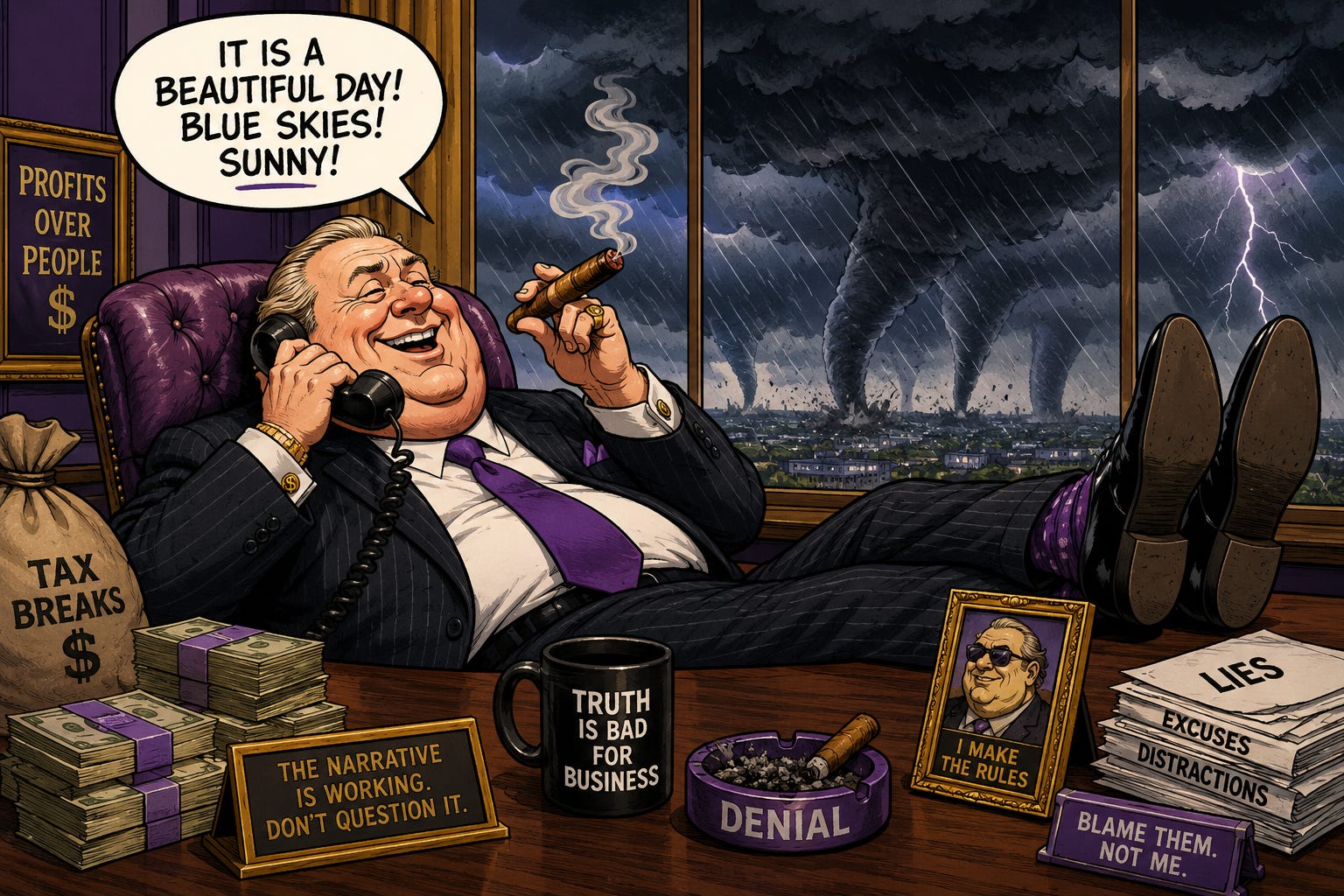
We are living through an era where facts often seem negotiable. When a public figure makes a statement that can be disproven within seconds, supporters rush to explain it away. When evidence contradicts a preferred narrative, people search for reasons to ignore the evidence rather than reconsider the narrative. When predictions fail, promises collapse, or explanations change, many simply move on as though none of it matters. I find that deeply troubling.
Perhaps that is what troubles me most about our current moment. Not the existence of lies, but the willingness of so many people to accommodate them. Every lie reaches a point where it can survive only because others choose to help it survive. We hear repeated claims about fraud, abuse, and waste. Those claims are often used to justify major decisions that affect millions of people. Programs are cut. Services are reduced. Workers are blamed. Entire groups become convenient targets. Whether those claims are accurate often becomes secondary to whether they are politically useful. What concerns me is not simply that these claims are made. What concerns me is how few people with influence, authority, or access consistently challenge them.
History teaches us that lies rarely become powerful on their own. They become powerful when people who know better decide that challenging them is inconvenient. A lie can only travel so far on its own. Eventually it requires people willing to look away. And eventually it requires the cooperation of people who know the truth and choose not to say it.
The lesson, the theme, and the point of this documentary for me was the devastation caused by someone who went to extraordinary lengths to prove that a lie was true.
Think about that.
Not the excuses. The devastation, the human tragedy left in the wake of a lie.